The world of gambling is seemingly full of patterns that many players feel are meaningful. If a roulette wheel just so happens to hit a black pocket six times in a row, it’s hard not to feel convinced that the next one to hit will be a long overdue red. On the other side of the casino, you can almost be certain that a win is just around the corner when a slot machine has chomped through your entire bankroll without giving any returns. People gamble with this mindset every day, and while there’s nothing wrong with believing in miracles, thinking wins are bound to happen as a result of these events is actually a misconception known to the casino world as the “gambler’s fallacy”.
This gambler’s fallacy is the belief that past random events influence future outcomes; a belief that luck is a rhythm that can be predicted and intuition can therefore reveal when a person is likely to win. However, we as humans were built with brains that are naturally wired to find patterns in everything life has to offer, even when there are none.
Understanding the gambler’s fallacy helps players avoid emotional decisions and gives them a clearer view of how chance truly works.
Why the Gambler’s Fallacy Feels So Convincing
Humans dislike randomness. When something appears chaotic, the mind looks for order. This instinct is useful in daily life because recognising genuine patterns helps people navigate risk. In gambling, however, that instinct misfires.
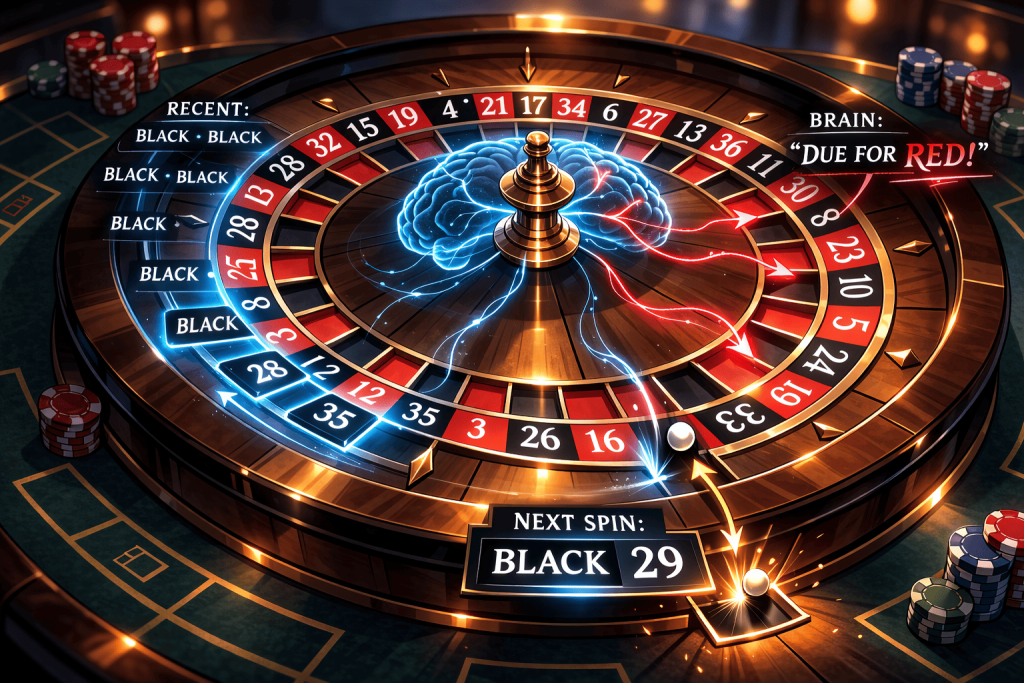
Imagine flipping a coin. Five heads appear in a row. Even though the next flip is still a fifty fifty chance, most people feel that tails is more likely. The streak pushes the mind to look for balance, as if the universe is keeping score. The same thinking appears in casinos. When a roulette wheel keeps landing on red, many players begin to feel that black is somehow more likely, despite each spin being completely independent.

Gamblers fall into this trap because losing or winning streaks provoke strong emotions. A long run of losses creates frustration and urgency. A series of wins creates excitement and a sense of momentum. Both emotional states distort clear thinking. People start believing in swings of luck instead of the mathematical reality of each game.
Independence of Events: The Core Idea Players Miss
Most casino games are built on independent events. This means one outcome has no influence on the next. Slot machines, roulette wheels, dice rolls and shuffled cards (after each round) operate this way. The odds reset every time.
When a roulette wheel hits black ten times in a row, the next result is no more likely to be red than if the previous spins had been perfectly mixed. The streak might feel extraordinary, but it does not change the mechanics of the game.
Slot machines work in the same way. Many gamblers believe that machines become due for a payout after a dry spell. In reality, each spin is determined by a random number generator. The past has no effect on the future. A machine can go cold for hours and still deliver its biggest win right after. It can pay out several times in quick succession without any change in its long term odds.
Understanding independence is the key to avoiding the gambler’s fallacy. Once a player grasps that each outcome is separate, they gain much more control over their decisions.
Where Players Most Often Misread Streaks
The gambler’s fallacy appears in almost every part of the casino, but some games trigger it more strongly than others.
Roulette: Repeating colours or numbers can make players feel that the wheel is following a pattern. They begin betting on what they think will bring balance, even though the wheel has no memory.
Craps: When a shooter rolls multiple winning numbers in a row, crowds gather because they believe the hot streak will continue. If the shooter rolls several bad outcomes, they assume the bad streak will keep going.
Slots: Long droughts make players stay at machines longer because they feel that a big win must be close. Others chase recent wins, expecting the streak to continue. Both behaviours ignore how random number generators work.
Blackjack: Although blackjack includes some strategy, players also fall for streak thinking in this game. After losing several hands, they might feel that a win is due, even though the shuffle can easily produce another losing round.
Why the Fallacy Leads to Emotional Decision Making
Once a player believes that a streak will swing back in their favour, they often begin raising their bets. This is where the gambler’s fallacy becomes risky. Chasing an imaginary turning point leads to larger losses and a stronger emotional attachment to the outcome.
Players convince themselves that one more spin or one more hand will bring the long-awaited correction. This creates a cycle of chasing losses or pushing luck far beyond the original budget. All of this comes from a misunderstanding of probability, yet it feels logical in the moment because the streak seems like a sign.
When you’re on a winning or losing streak at a live table, the chaotic waves of emotions and feelings coming from you and the people around you can be intense; not only are people reacting to what’s going on at the table at that very moment, they’re also anticipating what they think might happen next, which can be both exhilarating and nerve wracking.
The Difference Between Patterns and Probability
Lucky streaks can tempt players into thinking they have spotted a pattern, when actual fact, a streak comes entirely down to chance. It’s like when you perform a coin flip numerous times: inevitably, you’ll start to see results repeating themselves after a while, which is the same for dice rolls, spinning a slot machine, or dealing cards.
Probability does not promise short-term wins. If a roulette wheel hits black 10 consecutive times, a streak of reds is not destined to follow—the odds for every spin are exactly the same. The only reason a streak can appear to carry meaning is because that’s what our brains are wired to look for. Sad, but true…
Recognising the difference between real patterns and illusions of pattern is essential. Players who understand this tend to gamble more calmly and with better judgment.
How to Avoid Falling for the Gambler’s Fallacy
Awareness is the first step. Once you know the fallacy exists, you can catch yourself before making decisions based on streaks.
Here are simple habits that help players keep a clear head:
- Treat each event as independent
- Set a fixed budget before you start playing
- Take breaks during emotional highs or lows
- Avoid doubling bets to chase losses
- Remember that streaks are normal in random outcomes
These habits reduce the influence of instinctive pattern seeking and keep your choices grounded in reality.
A Clearer Way to Look at Luck
Luck does not follow a schedule. It does not accumulate pressure or become overdue. It simply appears or vanishes without regard for what happened before. When players accept this, they begin to see the casino environment with clearer eyes.
The gambler’s fallacy is fueled by the illusion of intuition. The expectation that wins will eventually compensate for losses is a natural feeling for gamblers, but this is merely us holding onto hope, not reality. The truth, as disappointing as it may be, is a lot simpler: all games based on chance result in random and unique outcomes, and the so-called “streaks” are all part of the experience.
Despite this fact, gambling is still one of the most exciting pastimes, and whether luck is on your side or not, this doesn’t change. It’s still important, however, to be conscious of the gambler’s fallacy and know when it’s time to walk away from a game if it’s no longer serving you.