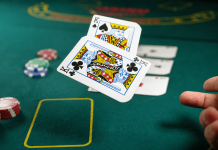
You’d think that people who aren’t particularly superstitious would instead favor logic and probability, but that’s rarely the case when it comes to gambling. While some of the world’s most famous gamblers have spent years getting to grips with the rules, odds, different combinations, and psychology of gambling, as well as the art of managing their bankroll—many of them still believe that acting out certain habits are capable of tipping the scales in their favor.
Nine times out of ten, these strange rituals have absolutely nothing to do with mathematics and are all based entirely on belief, identity, or their own self assurance. Here are a few of these icons that have made it into the hall of fame for their unusual, albeit, quite remarkable approaches to gambling.
Riding the Wave: Archie Karas and Momentum
Archie Karas is still talked about in casino circles for one of the wildest streaks ever recorded. In the early 1990s, he famously turned $50 into more than $40 million during what became known as “The Run.” Poker, blackjack, and high-stakes dice all seemed to fall in his favor.
Karas believed deeply in momentum. When he felt he was on a roll, he increased his bets without hesitation. He trusted the sensation of being “hot,” treating it almost like a force that needed to be respected. For him, walking away during a streak felt wrong. The ritual was not about lucky objects or clothing. It was about instinct and timing. He believed streaks were real, and that once you were in one, you had to commit fully. Eventually, that same belief followed him all the way back down when the tide turned, but during his rise, his faith in momentum was unwavering.
Never Leave the Table: Stu Ungar’s Obsession with Flow
Stu Ungar, widely considered one of the most naturally gifted poker players ever, had his own version of superstition. When he felt he had control of a table, he refused to leave it. Hours would pass. Breaks were avoided. Sleep became secondary.
Ungar believed that leaving would break the rhythm he had built. If he had read his opponents correctly and locked into the flow of the game, stepping away risked resetting that connection. Modern professionals emphasize rest and mental resets, but Ungar operated differently. He treated continuity as part of his edge, and staying seated was not just stubbornness—it was a ritual. In his mind, the moment you stood up, the spell could be broken.
Controlled Preparation: Phil Ivey’s Quiet Routine
One player that skips the theatrics is Phil Ivey. Renowned for his calm and collected character at the poker tables, he follows a strict routine of minimal distractions, limited interactions and conversations with people, and normally the same meal before every tournament he partakes in. Doing so enables him to become laser-focused right before the start of a game.
While this isn’t as much a superstition as it is a general preference or ritual, the consistency and repetitive nature of Ivey’s routine is something he greatly attributes to his success. Nerves are calmed, cortisol and stress levels are low, and all cylinders are firing in the way they should with this routine—something that’s imperative when such large amounts of money are on the line. They may not be as grandiose as the habits of some of the other people on this list, but Phil Ivey’s habits are a reflection of the belief that preparation really can help to shape performance, even in games of chance.
The Lucky Look: Doyle Brunson and Table Identity
Doyle Brunson’s cowboy hat became iconic over decades of poker dominance. While it started as a style choice, it eventually became part of his table identity. Brunson admitted that wearing it made him feel grounded. Without it, something would have felt off.
Many gamblers have similar attachments. A jacket worn during a big win becomes the “winning jacket.” A particular watch or ring becomes a permanent companion during high-stakes sessions. Logically, clothing cannot influence outcomes. Emotionally, it can change how someone carries themselves. Confidence shifts posture. Posture shifts presence. Presence affects how opponents react.
Performance and Perception: Amarillo Slim’s Theatrics
Amarillo Slim understood that gambling was as much about psychology as it was about cards. Known for his larger-than-life personality, Slim sometimes carried specific coins or insisted on certain seating arrangements. Whether he truly believed in their power is hard to know.
What he did understand was perception. If your opponents believe you are lucky, they may play more cautiously around you. If you act like you are riding a wave, others may hesitate. In that sense, superstition becomes a performance tool. The ritual may not influence fate, but it can influence the room.
The Rituals of Craps Players
Craps players might be the most openly ritualistic group in any casino. Blowing on dice before a roll has become almost tradition. Some players go further, practicing specific grips, release angles, and throwing styles. They believe that with enough consistency, they can influence how the dice land.
Casinos allow these rituals because the math remains intact. Modern dice and table game designs prevent predictable control. Still, the practice continues because it feels intentional. When a player sets the dice carefully and throws them with focus, it reduces the sensation of randomness. Even if the outcome remains unpredictable, the act itself builds confidence.
Why Superstitions Persist
The interesting thing is that many of these gamblers fully understood probability. They knew that no object, outfit, or routine could truly bend odds in their favor.
Yet rituals persist because gambling is emotional. Risk triggers adrenaline. Loss creates frustration. Wins create euphoria. In the middle of all that volatility, rituals offer stability. They create structure in an environment defined by uncertainty.
A lucky charm does not change the cards. But it might calm a nervous hand. A consistent pre-game routine does not alter a roulette wheel. But it might prevent a player from making an impulsive decision. In high-pressure settings, mindset matters. Superstitions often act as psychological anchors.
Being Human at the Table
From Archie Karas trusting momentum to Stu Ungar refusing to break rhythm, from Doyle Brunson’s hat to Phil Ivey’s controlled preparation, gambling history is filled with strange habits. None of them rewrote the rules of probability. What they did shape was the way these players approached the game.
Even the sharpest gamblers are still human. They crave rhythm. They look for patterns. They want something steady when outcomes are unpredictable. Rituals fill that gap. They offer familiarity when nothing else is certain.
In the end, maybe that is what these weird habits really represent. Not a belief that luck can be controlled, but a reminder that confidence and composure can be. And in a world where everything can turn on a single card or spin, that feeling of control can mean everything.