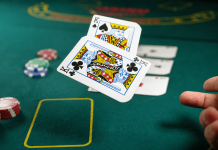
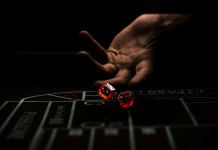
Step inside any of the world’s most prestigious casinos and you’re bound to see it happen. A player gives a slot machine a casual tap before hitting the spin button. A person at a craps table blowing on a die like a birthday cake, or a poker player giving the table a knock after riding a streak.
Many players believe implicitly that these kinds of rituals can alter the odds of casino games, and therefore the outcomes. And many of these rituals have been around a sling as people have been able to wager money on these types of games.
Whether it’s knocking on wood, wearing a “lucky” shirt, or refusing to say certain words at the table, gamblers across the world swear by habits that make absolutely no difference to the math.
But if that’s the case, why do people still entertain these beliefs and gambling practices? Let’s investigate.
Knocking on Wood: Don’t Jinx It
Knocking on wood is a superstition that goes back centuries, possibly to ancient cultures that believed spirits lived inside trees. Touching wood was a way to ask for protection or keep bad luck away. Fast forward to today, and you’ll hear it after a sentence like, “This machine’s been good to me… knock on wood.” It’s automatic. Almost instinctive.
When something feels like it’s going well, people get nervous about tempting fate. The knock is like a quick insurance policy. It doesn’t cost anything, nor does it slow the game down. It just feels safer than saying nothing at all. And in a casino, where luck can flip in seconds, that small comfort matters a lot.
Blowing on Dice: Part Ritual, Part Showmanship
If there’s one move that screams “casino,” it’s blowing on dice at a craps table. Movies like Casino and The Big Town may have made it famous, but the habit itself is very real. Players pause, bring the dice close, give them a breath, and then let them fly.
Does it change how the dice land? No. Does it feel powerful? Absolutely. There’s something about that pause that builds anticipation and centers the action on the player. It turns a random throw into a loud moment within a high-energy environment; a tiny ritual that creates focus.
And let’s be honest, it looks pretty cool too! Craps is as much about atmosphere as it is about numbers, and the cheering, table energy, and shared wins all contribute to that. Blowing on the dice adds to this drama—it’s part superstition, part performance, and part confidence boost.
Lucky Charms and “Winning” Outfits
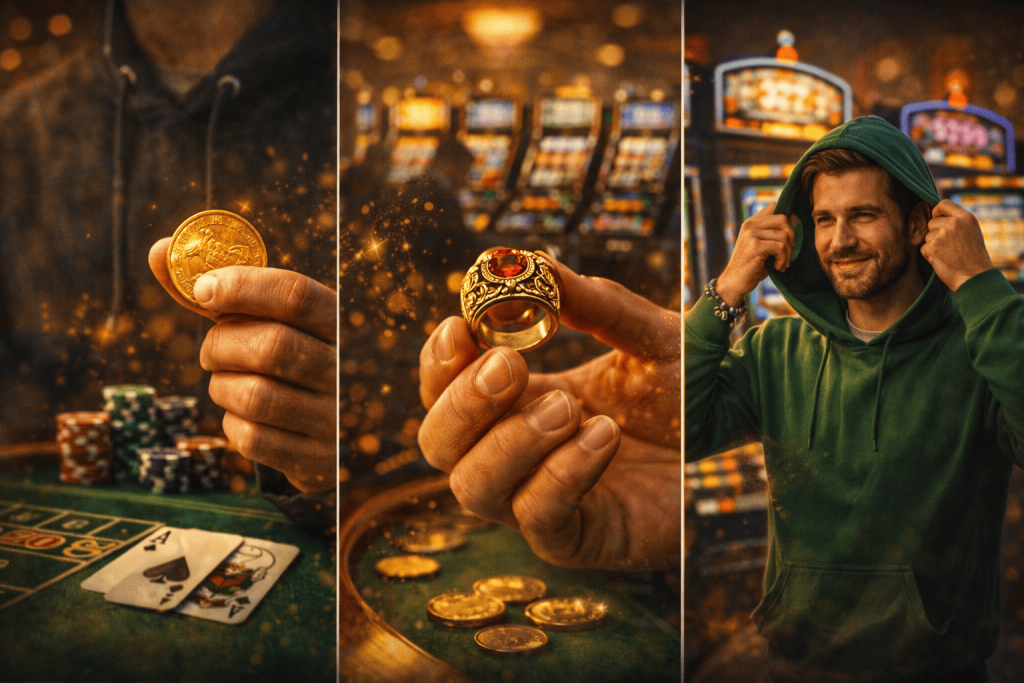
You’d be surprised how many players carry something small they believe brings luck. A coin from a previous jackpot, a ring worn during a big poker win, the same hoodie that somehow always seems to show up when things go right. Logically, fabric and metal don’t influence slot reels, but memory does.
When a big win happens and you’re wearing something specific, your brain connects the two. Next time you gamble, wearing that same item brings back the feeling of confidence and excitement from the last win. It’s not about magic, it’s about mindset. Feeling confident makes you calmer, and being calmer often leads to smarter decisions. That alone is enough to keep the “lucky shirt” in rotation.
“Hot” Machines and “Cold” Streaks
Every casino has players who believe machines have moods. You’ll often hear things like:
“That one’s due.”
“That one just paid out, it’s dead now.”
“This table’s hot.”
Modern casino games run on random number generators. Each spin is independent. The machine doesn’t know it hasn’t paid in an hour, and it doesn’t care if someone just hit a bonus round However, human brains love patterns, and we’re wired to search for meaning in randomness—it’s simply part of how we survived as a species. In a casino, that wiring turns into streak beliefs.
When someone sees five losses in a row, it feels significant. When someone sees two bonuses close together, it feels connected. Rituals grow from that pattern-seeking instinct. A tap on the screen, a switch in bet size, or a quick seat change. Such patterns give the illusion of influence in a place where influence is limited.
The Psychology of Feeling in Control
Here’s the real reason these rituals survive: gambling is emotional. Even when you’re playing for fun, there’s tension. Money is involved and the outcomes are uncertain, which naturally creates stress.
Rituals are designed to reduce stress. Athletes do the same thing: a basketball player bounces the ball the same number of times before every free throw. A tennis player adjusts their strings before serving. The action doesn’t change physics, it simply steadies the mind.
In a casino, knocking on wood or tapping a slot screen does something similar. It creates a moment of control before stepping back into randomness. And when you feel more in control, the experience feels better.
Cultural Superstitions at the Tables
Superstitions don’t look the same everywhere. In many Asian cultures, the number eight is seen as lucky, while the number four is often avoided because it sounds similar to the word for death. Some players will actively seek out tables or machines featuring “8” and steer clear of anything with “4.”
At craps tables in the US, saying the word “seven” at the wrong time can earn you some serious side-eye. Even if no one truly believes you can jinx the roll, nobody wants to test it. These traditions spread because new players copy what experienced players do. Before long, it becomes part of casino culture.
Online Rituals Are Alive and Well
You might think rituals disappear online. No dice to blow on, no wood to knock—not even close. Online players log out after wins to “lock it in”, while some only spin at certain times of day. Others refresh the page before a casino bonus round or increase bets after a near miss because it “feels right.” The setting may be digital, but the instinct is the same. People want a sense of rhythm and influence in a game built on chance.
Why These Rituals Aren’t Going Anywhere
The truth is that most players know their rituals don’t change the odds—but that’s not the point. Casino rituals add personality and create small traditions. They make the experience feel personal instead of purely mechanical. Blowing on dice makes a roll feel bigger, while knocking on wood makes a streak feel protected. Wearing a lucky item brings confidence back into the room.
Casinos run on probability, whereas, players run on emotion. And as long as gambling exists, there will always be someone tapping the machine before they spin, taking a breath before they roll, or knocking on wood after saying, “I think I’m on a heater.” Because sometimes, even when you know it doesn’t matter, it just feels better to do it anyway.